
25 Years of Smartphone History (2001–2026): From Pocket Gizmo to AI Supercomputer
By NEXA MOBILE Research Team | Published: August 2026 | Read Time: 8 min
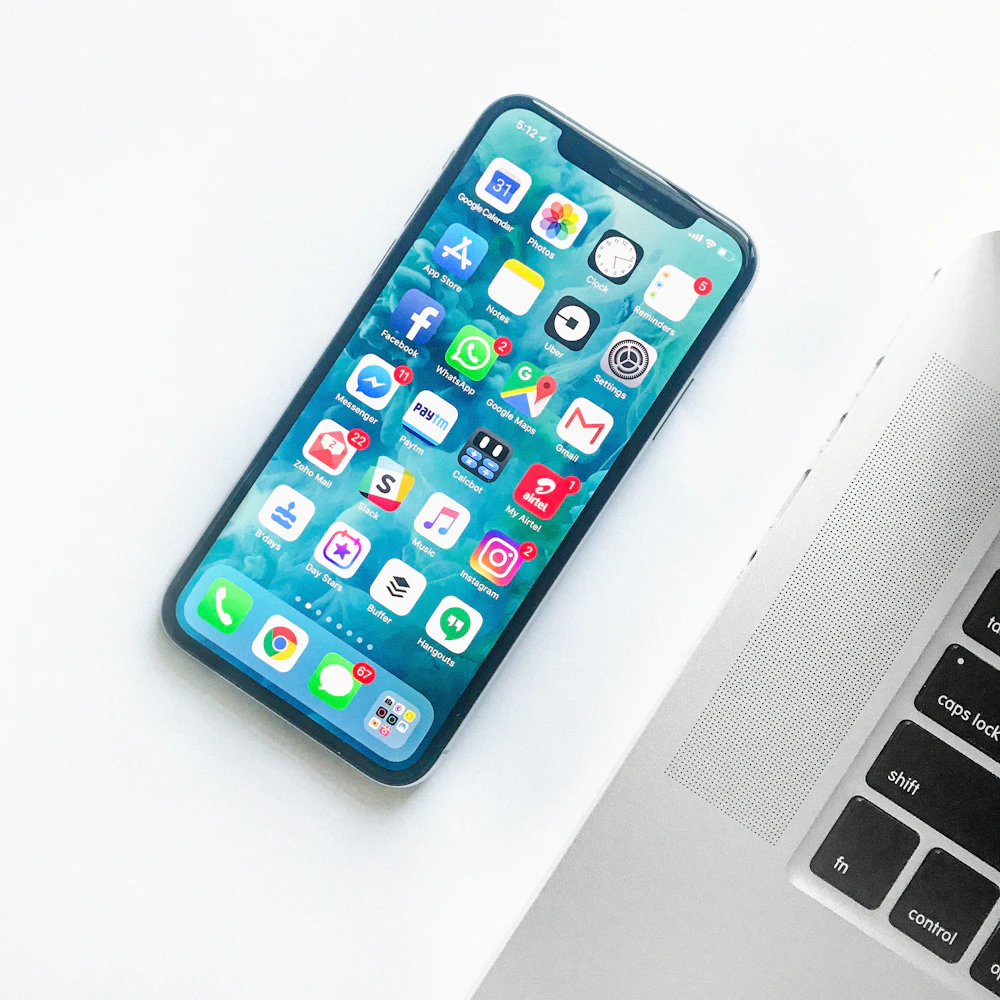
The 25-year leap: From tactile physical keypads to full-screen intelligent canvases.
The Beginning: What Even Is a Smartphone? (2001–2006)
The word "smartphone" was first coined in 1997, but it wasn't until the early 2000s that devices began to truly earn that title.
In 2001, Nokia dominated the world. The Nokia 3310 was everywhere — virtually indestructible, with a battery that lasted a week. But it wasn't smart. It made calls, sent SMS, and played Snake. That was it.
The real pioneers of the smartphone era were devices like the Nokia Communicator series and the BlackBerry 5810 (2002), which introduced email on the go for business users. These were chunky, keyboard-heavy devices aimed squarely at corporate professionals.
Palm was also making waves with its PDAs (Personal Digital Assistants) that could sync calendars and contacts with your PC. The Treo series merged Palm's PDA capabilities with a phone, creating one of the earliest true smartphones.
By 2005–2006, Symbian OS (used by Nokia) and Windows Mobile were the dominant platforms. Touchscreens existed but were resistive — you needed a stylus to use them accurately.
Key Milestone Stat: In 2005, there were approximately 10 million smartphones sold globally. The entire concept was still a niche luxury.
The Revolution: Apple Changes Everything (2007–2010)
On January 9, 2007, Steve Jobs walked onto a stage in San Francisco and said: "Every once in a while, a revolutionary product comes along that changes everything." He wasn't wrong.
The original iPhone had no 3G, no App Store, no copy-paste, and no MMS. By today's standards, it was primitive. But it had a multi-touch capacitive touchscreen — one you could use smoothly with your finger — and a full web browser that rendered real desktop websites. It felt like magic.
A year later, in 2008, Apple launched the App Store alongside the iPhone 3G. This was the true revolution. Suddenly, software distribution was democratized. The smartphone stopped being just a communication tool and became an extensible software platform.
Google responded rapidly with Android OS in 2008, launching on the HTC Dream (T-Mobile G1). Android was open-source, allowing hardware manufacturers around the globe to build affordable smartphones, setting the stage for massive worldwide adoption.

The App Store and Google Play converted smartphones into global commerce engines.
The Explosion: Android vs. iPhone (2011–2015)
The early 2010s were defined by one fierce battle: Apple vs. Samsung. The two tech giants fought intense patent wars while simultaneously pushing mobile technology forward at breakneck speeds.
- 2011: Apple launched the iPhone 4S featuring Siri — bringing AI voice assistance to consumers. Samsung released the Galaxy S2, establishing Android as a premium contender.
- 2012: Smartphones went mainstream. The Samsung Galaxy S3 sold over 70 million units, while high-speed 4G LTE networks began expanding globally.
- 2013: Rise of the phablet. Samsung's Galaxy Note 3 proved users wanted screen real estate above 5.5 inches. Meanwhile, instant messaging apps like WhatsApp fundamentally disrupted SMS.
- 2014–2015: Fingerprint sensors (Touch ID), premium metal glass builds, and secure mobile payments (Apple Pay & Android Pay) matured the ecosystem.
The Maturity Era: Computational Photography & OLEDs (2016–2019)
By 2016, mobile hardware reached incredible performance standards. Innovation shifted toward camera capabilities and full-screen bezel-less engineering.
iPhone 7 Plus (2016) popularized dual-camera arrays for Portrait Mode optical bokeh. Google Pixel (2016) pioneered computational photography, using multi-frame HDR exposure and machine learning to produce DSLR-like results from small sensors.
In 2017, Apple celebrated a decade of mobile tech with the iPhone X, eliminating the Home Button in favor of gestures, full-screen OLEDs, and 3D Face ID. Meanwhile, Chinese brands — Xiaomi, OPPO, Vivo, and Realme — disrupted global markets by offering flagship specifications at aggressive mid-range price points.

Modern displays evolved from low-res LCDs to 120Hz LTPO OLED flexible panels.
The 5G & Foldable Era (2020–2023)
5G rollout accelerated in 2020, boosting data speeds exponentially. Flexible display technology matured, bringing commercially viable foldables to market like the Samsung Galaxy Z Fold and Galaxy Z Flip series.
Emergency satellite connectivity debuted on smartphones in 2022, turning consumer handhelds into vital safety lifelines in off-grid remote regions across the globe.
NEXA Insight: How India's Smartphone Market Shifted
India became the world's second-largest smartphone market driven by three factors:
- Hyper-Affordable 4G/5G Data: Accelerated mobile internet consumption across Tier 2 and Tier 3 cities.
- UPI Payment Revolution: Made smartphones the primary digital wallet for 400+ million citizens.
- Value-Flagship Segment: Brands like Xiaomi, Vivo, and OnePlus delivered 90% flagship performance at 40% of the cost.
The Present: Smartphones in 2024–2026 (The AI Revolution)
We have entered the era of On-Device Generative AI. Platforms like Apple Intelligence, Google Gemini Nano, and Galaxy AI process real-time tasks locally on specialized Neural Processing Units (NPUs):
- On-Device AI Agents: Real-time call translation, natural photo object removal, contextual email summarization, and automated workflows without needing cloud servers.
- Periscope Optical Zoom: 5x to 10x mechanical optical lenses combined with AI resolution restoration deliver DSLR-grade photography.
- Foldable Price Democratization: Reliable flip foldables now start under ₹50,000 in India, opening new form factors to mainstream buyers.
- Silicon-Carbon Batteries & Fast Charging: High-density 5,500mAh to 6,000mAh batteries paired with 100W+ fast charging recharge devices completely in under 25 minutes.
25 Years in Numbers: Data & Market Highlights
Global Annual Smartphone Shipments
| Year | Units Sold | Market Phase |
|---|---|---|
| 2007 | 122 Million | Early Innovation Era |
| 2010 | 296 Million | Mass Adoption Begins |
| 2013 | 968 Million | 4G & Phablet Era |
| 2016 | 1,470 Million | Historical Sales Peak |
| 2019 | 1,370 Million | Market Maturity |
| 2022 | 1,210 Million | Post-Pandemic Adjustment |
| 2025-2026 | 1,320 Million | AI Upgrade Supercycle |
25-Year Innovation Timeline
- 2007 — Original iPhone introduces multi-touch capacitive display.
- 2008 — Apple App Store and Google Android launch.
- 2010 — iPhone 4 introduces Retina Display & front selfie camera.
- 2012 — 4G LTE goes commercial nationwide worldwide.
- 2013 — Touch ID fingerprint security debuts on iPhone 5S.
- 2016 — Dual cameras and Google Pixel computational photography.
- 2017 — iPhone X bezel-less OLED display & 3D Face ID.
- 2020 — 5G networks go mainstream alongside commercial foldables.
- 2022 — Emergency SOS satellite messaging technology.
- 2024–2026 — On-device Generative AI agents and intelligent real-time processing.
What's Next? The Horizon Beyond 2026
As we look ahead, mobile personal computing is evolving into new paradigms:
- Under-Display Invisible Cameras: Seamless, hole-punch-free front display panels.
- Rollable & Expanding Screens: Displays that expand dynamically from phone size to tablet size.
- XR & AR Glasses Tethering: Smartphones acting as compute hubs for lightweight smart glasses.
- Sustainable Eco-Builds: 100% recycled rare-earth metals and carbon-neutral manufacturing.
NEXA Buying Guide Verdict: Choosing Your Phone in 2026
With 25 years of technological progress behind us, you no longer need to spend a fortune to get an exceptional phone:
- Under ₹20,000: Look for 5G, 120Hz AMOLED screens, 5,000mAh+ battery, and 67W fast charging.
- ₹20,000 to ₹45,000: Prioritize flagship-grade main camera sensors (OIS), clean software, and guaranteed 4-year updates.
- ₹45,000+: Choose based on form factor (Foldable vs. Slab) and ecosystem preferences (Apple Intelligence vs. Google Gemini).
Comments 0